
6 Vitamins and Supplements That Affect Blood Test Results

Why Supplements Interfere With Blood Test Accuracy
If you take vitamins or supplements daily, there is something important to know before your next blood draw: certain supplements that affect blood test results directly, not by causing health problems, but by chemically interfering with the tests themselves.
According to the U.S. National Library of Medicine, many routine lab tests can be affected by what you consume before your appointment. Some supplements raise or lower the actual levels being measured. Others interfere with the chemical reactions the lab uses to detect those levels. Either way, the result is a reading that does not reflect your true health, which can lead to false diagnoses, unnecessary follow-up tests, or missed conditions.
This is not a rare edge case. Common dietary supplements can disrupt lab accuracy and affect up to 4 in 10 blood tests through biochemical interactions or assay interference. The fix is straightforward: know which supplements to pause, and by how long. Phlebotomy On Wheels
Whether you are booking a mobile blood draw at home or visiting a patient service center, this guide covers the 6 most common supplements that cause interference, and the exact timeframes to pause each one.
Medical Disclaimer: This article is for educational purposes only. Never stop a prescribed medication without speaking to your doctor first. These guidelines apply to over-the-counter supplements only.
1. Biotin — The Most Disruptive Supplement for Lab Tests
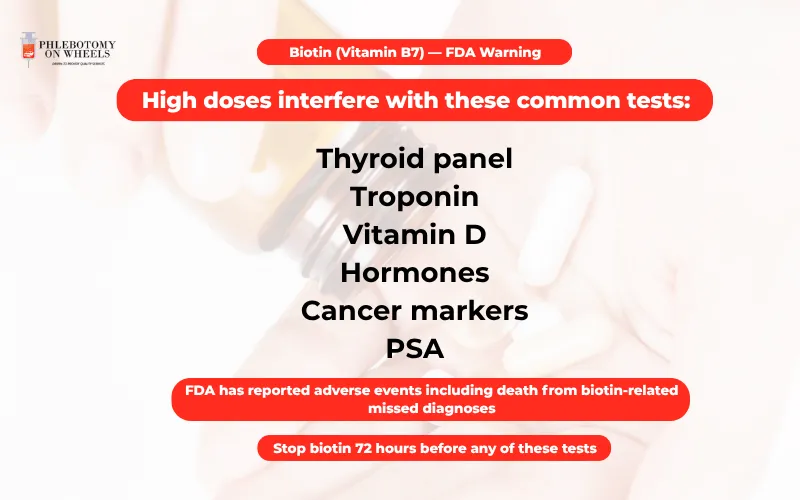
Biotin (Vitamin B7) is taken widely for hair, skin, and nail health, and it is the single most documented cause of blood test interference across multiple test categories.
The problem is mechanical: biotin interferes with immunoassay-based tests, which are the method labs use to measure thyroid hormones (TSH, T3, T4), troponin (heart attack marker), vitamin D, hormone panels, and several cancer markers. High-dose biotin in your blood mimics a chemical binding signal, causing the test to read falsely high or falsely low depending on the assay.
The FDA has formally warned about this. The presence of biotin in blood samples from patients consuming high levels through supplementation may result in incorrect test results that may go undetecte, including one reported death from a falsely low troponin reading that caused a missed heart attack diagnosis. ConsumerLab.com
This is not a theoretical risk. It happens regularly in patients taking the doses found in standard hair and nail supplements.
What to pause: Any standalone biotin supplement or multivitamin containing biotin above 1,000 mcg (1mg).
How long before your draw: Stop at least 72 hours (3 days) before testing. If you take high-dose therapeutic biotin (5mg or above), pause for 5-7 days and tell your doctor.
Tests most affected: TSH, T3, T4, troponin, vitamin D, cortisol, sex hormones, PSA, some cancer markers.
2. Vitamin C — How It Skews Glucose and Other Readings
Vitamin C is an antioxidant, and that antioxidant activity is exactly what interferes with certain lab tests.
High-dose vitamin C can alter certain glucose methods and give falsely elevated readings on some point-of-care meters and certain colorimetric lab assays. For diabetic patients or anyone monitoring blood sugar, a falsely elevated glucose reading caused by vitamin C supplementation can trigger unnecessary insulin adjustments or repeated testing. Check Out Phlebotomy Services For These Tests
Vitamin C also interferes with fecal occult blood tests (used to screen for colorectal cancer), causing false negatives by blocking the chemical reaction that detects hidden blood in stool.
What to pause: Vitamin C supplements above 500mg daily. Normal dietary vitamin C from food is generally not sufficient to cause interference.
How long before your draw: Stop 24-48 hours before glucose or colorimetric tests. Stop 3 days before fecal occult blood tests.
Tests most affected: Fasting glucose, blood sugar monitoring, fecal occult blood, creatinine (at very high doses), some kidney function markers.
3. Iron Supplements — Why Timing Your Draw Matters
If you are taking iron supplements for anemia or low ferritin, taking them on the morning of your blood draw will artificially inflate your serum iron reading, making your levels appear normal or even elevated when your stored iron (ferritin) may still be critically low.
This creates a specific clinical problem: a doctor monitoring iron supplementation therapy may see a falsely elevated serum iron and reduce or stop your dosage prematurely. Your total iron binding capacity (TIBC) measurement is also affected, which is a key component of diagnosing iron deficiency anemia.
What to pause: Your iron supplement on the morning of the draw. For tests specifically measuring iron levels, stop 24 hours before.
How long before your draw: 24 hours before iron studies or ferritin tests. Morning-of dose is the most impactful, skip it.
Tests most affected: Serum iron, TIBC, iron saturation, ferritin (less affected but still relevant).
4. Vitamin D — The Timing Problem Most Patients Miss
Vitamin D supplementation does not chemically interfere with the test the way biotin does, the 25(OH)D test directly measures vitamin D in your blood. The problem here is different: taking a large dose of vitamin D shortly before testing temporarily spikes your blood level, making your reading appear higher than your true long-term baseline.
This matters most when your doctor is trying to establish whether you are deficient, sufficient, or at toxic levels. A reading taken 2 hours after a 5,000 IU dose will not reflect your actual status.
What to pause: Your vitamin D supplement on the morning of the test, or if on high-dose therapy (5,000 IU or above), pause for 24 hours.
How long before your draw: Take your test either before your daily supplement dose, or pause for 24 hours. Discuss longer washout with your doctor if on high-dose prescription D3.
Tests most affected: 25-OH Vitamin D (the standard vitamin D test), calcium levels (vitamin D affects calcium absorption over time).
5. Fish Oil — What It Does to Your Lipid Panel
Fish oil supplements lower triglyceride levels. This is actually a therapeutic effect used intentionally in cardiovascular management, but it means that if you want a true baseline lipid panel unaffected by supplementation, taking fish oil before the test gives you artificially lower triglyceride readings than your actual untreated level.
Fish oil and niacin can change triglycerides and cholesterol, hold these for 1 to 2 weeks when precise lipid numbers matter. Schedule your at home blood draw appointment in advance.
Fish oil also has mild blood-thinning properties, which can marginally affect platelet function tests if those are being ordered alongside your lipid panel.
What to pause: Fish oil supplements if your doctor wants a true baseline lipid panel. Do NOT stop prescribed omega-3 therapy (like Lovaza) without your doctor’s guidance.
How long before your draw: 48-72 hours for a standard baseline panel. For a true unmedicated baseline (e.g., to diagnose familial hyperlipidemia), your doctor may ask you to stop for 2 weeks.
Tests most affected: Triglycerides, HDL ratio, lipid panel baseline measurements.
6. Zinc — How It Affects Copper and Hormone Tests
High-dose zinc supplementation has two main effects on lab results.
First, chronic high zinc intake suppresses copper absorption, so if your doctor is testing both zinc and copper (common in inflammatory condition workups and nutritional panels), taking zinc supplements before the test creates a falsely elevated zinc and simultaneously falsely depressed copper reading. The ratio between the two appears more skewed than it actually is at baseline.
Zinc and magnesium supplements can elevate measured nutrient levels, making it difficult to assess true status when supplementing. Harvard Health
Second, zinc has mild effects on testosterone and certain hormone measurements at very high doses over time.
What to pause: Zinc supplements above 25mg daily. Standard multivitamin zinc doses are unlikely to interfere significantly.
How long before your draw: 24 hours before zinc/copper panels or nutritional status tests.
Tests most affected: Serum zinc, serum copper, zinc-to-copper ratio, some hormone panels at chronic high doses.
Other Supplements Worth Pausing Before Your Blood Draw

These supplements are less commonly discussed but worth knowing:
- Vitamin B12: High oral doses temporarily elevate serum B12, making true deficiency harder to detect. Pause 24-48 hours if being tested for B12 deficiency specifically.
- Vitamin E: Blood-thinning properties can affect platelet aggregation tests and coagulation studies. Pause 24-48 hours before coagulation panels.
- Niacin (Vitamin B3): Can significantly raise HDL and lower LDL within weeks at therapeutic doses — affecting lipid panel baseline. Pause per your doctor’s guidance.
- Garlic and turmeric supplements: Both have blood-thinning properties affecting platelet function. Pause 5-7 days before any platelet or coagulation testing.
- Melatonin: Can affect cortisol levels and some metabolic markers if taken the night before morning hormone tests.
- Protein powders: Protein supplements can raise BUN (Blood Urea Nitrogen), temporarily suggesting kidney stress in healthy patients. Skip heavy protein supplementation 24-48 hours before kidney function panels. Harvard Health
The simplest rule: tell your phlebotomist every supplement you take, including dosage. It takes 30 seconds and can prevent a repeat appointment.
How Long Before a Blood Test Should You Stop Supplements?
| Supplement | Pause Before Draw | Tests Affected |
|---|---|---|
| Biotin (Vitamin B7) | 72 hours (3 days) | Thyroid, troponin, hormones, vitamin D |
| Vitamin C | 24-48 hours | Glucose, fecal occult blood |
| Iron supplements | 24 hours | Serum iron, TIBC, ferritin |
| Vitamin D | 24 hours (day-of dose) | Vitamin D level, calcium |
| Fish Oil | 48-72 hours | Triglycerides, lipid panel |
| Zinc | 24 hours | Zinc, copper, hormone ratios |
| Vitamin E | 24-48 hours | Coagulation, platelet function |
| Niacin | Per doctor’s guidance | Lipid panel |
| Protein powders | 24-48 hours | BUN, creatinine, kidney function |
| Herbal supplements | 5-7 days | Liver enzymes, platelet function |
The universal rule: Never stop a prescribed medication to prepare for a blood test. These guidelines apply to over-the-counter supplements only. When uncertain, call your doctor’s office before your appointment.
For a complete blood draw preparation guide including fasting, hydration, and what to wear, see our step-by-step mobile blood draw preparation guide.
How Mobile Blood Draws Make This Easier

One practical advantage of scheduling your blood work through Phlebotomy On Wheels is appointment timing flexibility. When you have a window of 24-72 hours to pause supplements before a specific test, you can schedule your mobile blood draw at exactly the right time within that window, without rearranging work, arranging transport, or waiting for a specific lab’s open hours.
Our certified phlebotomists can also answer preparation questions when they arrive. If you have standing orders for recurring lab monitoring, we coordinate timing directly with your ordering physician to ensure each draw is properly prepared for the tests being run.
This is especially useful for patients managing chronic conditions who take multiple supplements and need regular monitoring, the timing of each draw matters, and mobile scheduling gives you the control to get it right.
For more on cost and coverage, see our mobile phlebotomy cost guide.
Frequently Asked Questions
Yes. Certain vitamins and supplements, particularly biotin, vitamin C, iron, and vitamin D, can directly interfere with blood test accuracy. The effect depends on the dose, the type of test being run, and how recently you took the supplement before your draw.
Not necessarily all of them, and never stop prescription medications without doctor approval. The key ones to pause are biotin (72 hours before), vitamin C (24-48 hours before), iron (24 hours before), and vitamin D (24 hours before if testing D levels). Always inform your doctor and phlebotomist of everything you take.
Yes. High-dose biotin supplementation is one of the most documented causes of falsely abnormal thyroid test results. It interferes with the immunoassay testing method used for TSH, T3, and T4 measurements. Stop biotin at least 3 days before thyroid blood work.
Yes. High-dose vitamin C can cause glucose readings to appear falsely low. For diabetic patients or anyone monitoring blood sugar levels, this is particularly important, stop vitamin C supplements 24 to 48 hours before a glucose or HbA1c test.
Absolutely. Phlebotomy On Wheels provides certified at-home blood draws throughout Maryland, Washington DC, and Virginia. You schedule your appointment at exactly the right time in your supplement pause window — no clinic visit or waiting room required.
Tell your phlebotomist immediately when they arrive, before the draw begins. They will note it on the sample documentation, and your ordering physician can decide whether to proceed or reschedule. It is always better to disclose than to get a result that triggers unnecessary follow-up.
Book Your At-Home Blood Draw Today
Preparing properly for your blood test starts with knowing what to pause, and ends with getting it done right.
Our certified phlebotomists bring professional, accredited blood collection directly to your home, office, or care facility. Same lab accuracy. No travel required.
Schedule Your At-Home Blood Draw Today →
Services available for your appointment:
- Routine Blood Draws — Standard scheduled visits
- Standing Orders — Recurring monitoring on your schedule
- Therapeutic Phlebotomy — Medically directed treatment
- Specialty Testing Collections — Hormones, paternity, specialized panels
Sources & Citations
- MedlinePlus — U.S. National Library of Medicine: Lab Tests
- NIH — Biotin Interference in Immunoassay Testing (PMC5641525)
This article is for educational purposes only and does not constitute medical advice. Always consult your healthcare provider before stopping any supplement before lab work.
Walk-In Available