
Mobile Phlebotomy for Seniors & Homebound Patients: Complete 2026 Guide

Why Seniors and Homebound Patients Choose Mobile Phlebotomy
For millions of older adults and homebound patients across the United States, a simple blood test is anything but simple. That’s why mobile phlebotomy for seniors is the best option for older patients.
Getting to a traditional laboratory requires arranging transportation, navigating parking lots, waiting in crowded waiting rooms, and sitting in clinical settings, all of which can be exhausting, painful, or even dangerous for patients with limited mobility, chronic conditions, or post-surgical recovery needs.
Mobile phlebotomy changes that completely.
According to the National Institute on Aging, maintaining regular health monitoring is one of the most important factors in managing chronic conditions in older adults. Mobile phlebotomy makes that monitoring possible, without the barriers that prevent so many seniors from getting the testing they need.
Our mobile phlebotomy services bring certified, professional blood collection directly to your senior family member’s home, nursing facility, assisted living community, or care center. The same accuracy. The same lab results. Zero travel required.
This guide is written for:
- Seniors and elderly patients who need regular blood work
- Family caregivers arranging medical care for a loved one
- Healthcare coordinators at senior living facilities
- Patients recovering from surgery who cannot travel to labs
The Real Challenges Seniors Face at Traditional Labs
Understanding why mobile phlebotomy matters starts with understanding what seniors actually face when trying to access traditional lab services.
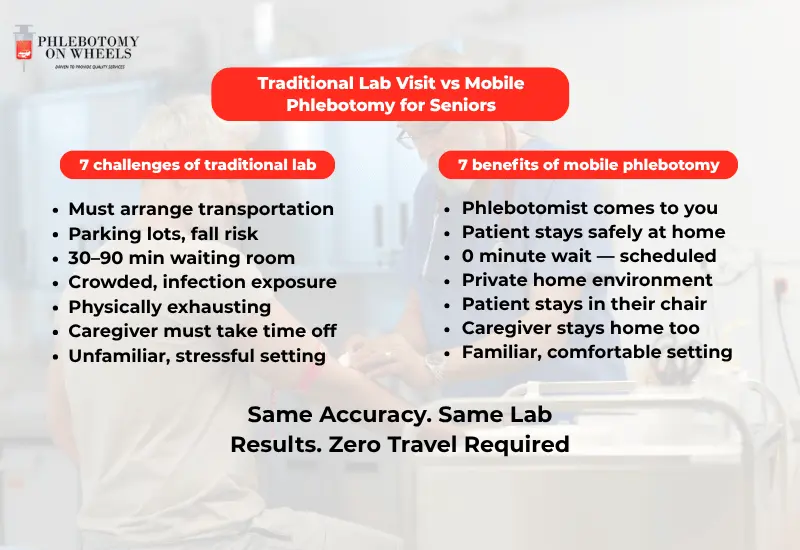
Transportation Barriers
According to the U.S. National Library of Medicine (MedlinePlus), transportation is one of the leading barriers to healthcare access for older adults. Many seniors:
- No longer drive or have limited driving ability
- Rely on family members who work during lab hours
- Cannot afford or access regular medical transport services
- Live in rural areas with limited public transit
For a patient who needs monthly blood work to monitor diabetes, kidney disease, or heart medications, this barrier becomes a recurring, exhausting challenge.
Fall and Injury Risk
Walking through parking lots, clinic hallways, and waiting rooms presents genuine fall risk for elderly patients. According to the National Institute on Aging, falls are the leading cause of injury among older adults in the United States, and unfamiliar environments significantly increase that risk.
Labs and clinics are not designed with mobility-limited patients in mind. Slippery floors, tight waiting room chairs, and long walks from parking areas all create hazards that simply do not exist in a patient’s own home.
Waiting Room Fatigue and Infection Risk
Sitting in a crowded waiting room for 30–90 minutes is physically demanding for many elderly patients, particularly those with:
- Joint pain, arthritis, or back conditions
- Fatigue from chronic illness or medication
- Compromised immune systems
- Cognitive conditions like dementia or Alzheimer’s
The same waiting rooms that are merely inconvenient for a healthy young adult can be genuinely distressing and risky for a frail elderly patient.
The Emotional and Psychological Cost
For many elderly patients, the effort required to get to a lab is discouraging enough that they postpone or skip necessary blood work entirely, with real health consequences. Delayed testing means delayed diagnosis and delayed treatment.
How Mobile Phlebotomy Solves Every One of These Challenges
Mobile phlebotomy is not just a convenience, for many senior patients, it is a genuine healthcare solution.
| Challenge | Traditional Lab | Mobile Phlebotomy |
|---|---|---|
| Transportation | Patient must arrange own transport | Phlebotomist comes to patient |
| Fall risk | Parking lots, hallways, unfamiliar floors | Patient stays in their own home |
| Wait time | 30–90 minutes in waiting room | 0 minutes — appointment-based |
| Infection exposure | Crowded public waiting area | Private home environment |
| Physical fatigue | Full trip required | Patient remains seated at home |
| Scheduling difficulty | Lab hours may not match caregiver schedule | Flexible scheduling available |
| Consistency of care | New staff at every visit | Same or familiar phlebotomists |
| Caregiver burden | Caregiver must take time off work | Caregiver can be present at home |
For a broader look at mobile vs. traditional lab visits, see our full comparison guide.
The result is not just more convenient blood testing. It is more consistent blood testing, and consistency is what drives better health outcomes for seniors managing chronic conditions.
For patients who require frequent monitoring through standing orders, mobile phlebotomy transforms a monthly ordeal into a routine 20-minute home visit.
Who Qualifies for At-Home Blood Draws?
One of the most common questions we receive: “Does my family member actually qualify for mobile phlebotomy?”
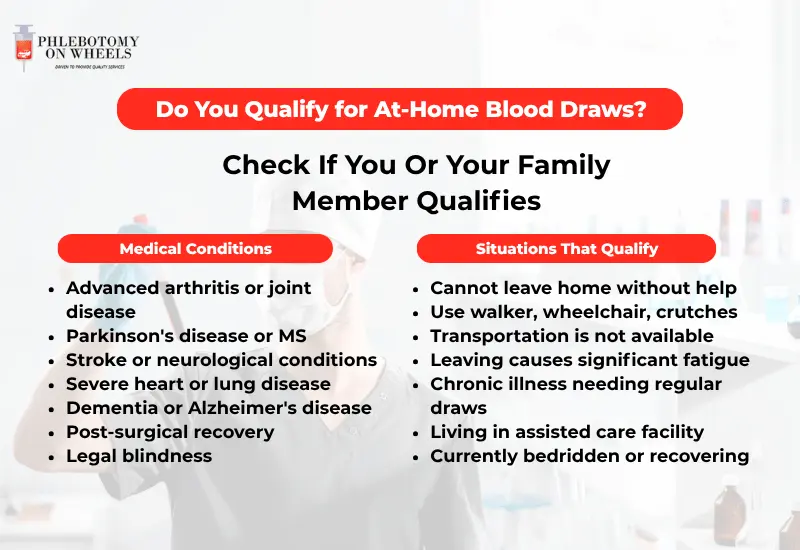
The answer for most patients is yes. Here is a breakdown of the most common qualifying situations:
Who Typically Benefits Most
Patients often benefit most from an at home visit when leaving the house requires:
- A considerable and taxing effort
- The use of supportive devices (cane, walker, wheelchair, crutches)
- The assistance of another person
- Special medical transportation
Common situations where an at home visit helps most:
- Advanced arthritis or joint disease limiting mobility
- Severe cardiovascular or pulmonary disease
- Neurological conditions affecting mobility (Parkinson’s, MS, stroke recovery)
- Legal blindness
- Psychiatric conditions preventing safe independent travel
- Dementia or cognitive decline
Mobility-Limited Patients
Even patients who don’t fit these examples exactly can still book, this is a self pay service open to anyone. If leaving the home is painful, exhausting, or requires significant help, mobile phlebotomy is an appropriate solution.
Post-Surgery and Recovery Patients
Patients recovering from surgeries, including hip replacements, knee replacements, cardiac procedures, and abdominal surgeries, often need blood work during recovery when travel is either medically inadvisable or physically impossible.
Our routine blood draws and STAT draws are available for post-surgical patients who need results quickly without leaving their recovery environment.
Chronic Illness and Frequent Testing Patients
Patients with conditions requiring regular blood monitoring often find that mobile phlebotomy transforms their care:
- Diabetes patients: Regular A1C, glucose, and kidney function monitoring
- Heart disease patients: INR monitoring for blood thinners like Warfarin
- Kidney disease patients: Monthly or bi-monthly metabolic panels
- Cancer patients: Regular CBC monitoring during treatment
- Thyroid disorder patients: Periodic TSH and hormone level checks
For these patients, standing orders allow scheduled recurring visits, eliminating the need to re-arrange transport every single time a blood test is needed.
What This Costs
Mobile phlebotomy is a self pay service, not covered by insurance, Medicare, or Medicaid. No doctor’s order or homebound status is required to book, one clear price, paid at the time of the visit. See the complete pricing guide for a full breakdown.
What to Expect During a Senior Home Blood Draw
Knowing exactly what will happen during a home visit reduces anxiety, for both the patient and their caregiver.
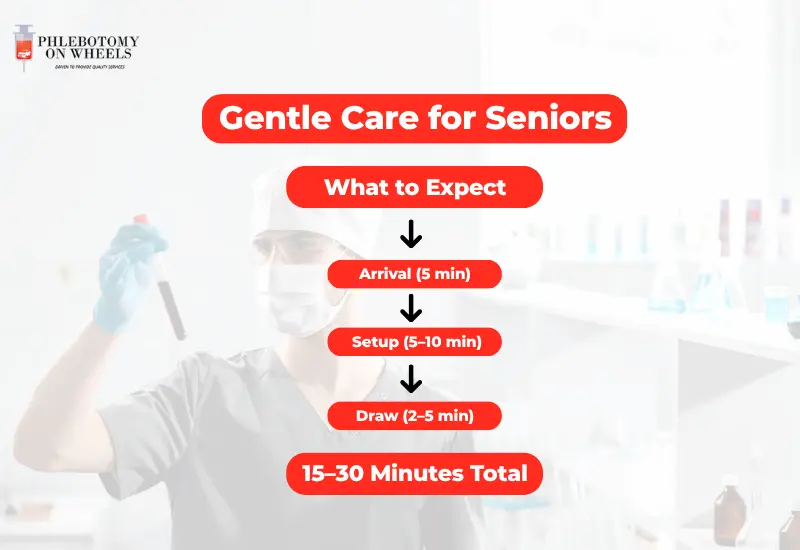
How We Adapt for Each Patient
No two senior patients are the same. Our certified phlebotomists are trained to adapt their approach for:
Patients with fragile or difficult veins: Aging naturally changes vein structure, veins become more fragile, less elastic, and harder to locate. Our phlebotomists are experienced with elderly vein access and use appropriate needle gauges, gentle techniques, and butterfly needles when necessary.
Patients who cannot sit upright: Blood draws can be performed with patients lying in bed, reclining in a chair, or seated in a wheelchair. The patient does not need to move to a special location.
Patients with dementia or cognitive decline: Our phlebotomists are trained in calm, patient-centered communication. We speak directly and clearly, keep movements slow and predictable, and always inform the patient before each step. Caregivers are welcome to remain present throughout the entire appointment.
Patients with limited arm mobility: Alternative draw sites can be used when the standard inner elbow site is not accessible. We discuss options with the patient and caregiver before beginning.
Safety and Fall Prevention During Home Visits
One of the most important advantages of home blood draws for elderly patients is the elimination of fall risk in unfamiliar environments. During a home visit:
- The patient never needs to stand or walk during the appointment
- All equipment comes to the patient — the patient does not come to the equipment
- The familiar home environment reduces disorientation and anxiety
- The caregiver is present and can assist if needed
- No transfer between vehicles, parking lots, or clinic hallways required
If the patient requires additional support during the draw, our phlebotomists will request caregiver assistance and wait until the patient and caregiver are fully comfortable before proceeding.
How to Prepare a Senior or Homebound Patient
Caregivers play a key role in making a home blood draw successful. Here is a simple preparation guide:
Before the appointment:
- Confirm whether the specific tests require fasting (ask the ordering physician) — For a full preparation guide, see our complete blood draw preparation article
- Ensure the patient is well-hydrated the day before (easier vein access)
- Have the patient’s ID ready
- Choose a comfortable location — a recliner, armchair, or bed all work
- Clear a small surface nearby for the phlebotomist’s equipment
- Have a light snack ready for the patient after the draw, especially if fasting
On appointment day:
- Dress the patient in loose, comfortable clothing with easy sleeve access
- Keep pets in a separate room during the visit
- Have the caregiver present, especially for patients with dementia or anxiety
- Remind the patient that the visit will be brief (15–30 minutes total)
- Have the lab order or requisition form available if you have a paper copy
For patients with dementia:
- Inform the patient simply and calmly: “A nurse is coming to your home to help with your health”
- Avoid detailed explanations that may cause anticipatory anxiety
- Keep the environment calm — turn off loud television, reduce activity in the home
- Stay present and hold the patient’s hand during the draw if it helps them stay calm
Understanding pricing for these visits? See our full mobile phlebotomy cost guide for a complete self pay breakdown.
Mobile Phlebotomy for Assisted Living and Care Facilities
Mobile phlebotomy is not limited to private residences. Our certified phlebotomists serve:
Assisted living communities: Residents of assisted living facilities often need regular blood work as part of their care plans. We can visit individual residents or schedule facility-wide service days for multiple residents in a single visit, reducing disruption and cost.
Skilled nursing facilities: Patients in skilled nursing care often have complex medical needs requiring frequent blood monitoring. We coordinate directly with facility nursing staff to ensure seamless service.
Memory care facilities: Patients in memory care require a patient, experienced approach to blood draws. Our phlebotomists are trained in dementia-sensitive communication and can work alongside facility staff and family members.
Adult day centers: For patients who attend adult day programs, we can schedule visits during program hours to minimize disruption to their routines and eliminate the need for family caregivers to take additional time off.
For facility administrators: We offer specimen pick-up and delivery services for facilities that need reliable, scheduled collection and transport of lab specimens. Our EKG and vitals monitoring services are also available for comprehensive on-site care.
Contact us to discuss recurring facility service arrangements and volume-based scheduling.
Frequently Asked Questions
A: Yes. Bedridden patients are among those most frequently served by mobile phlebotomy. Our phlebotomists are trained to draw blood from patients in bed, adapting their technique to the patient’s position. No movement is required from the patient.
A: This is one of the most common concerns caregivers raise when booking. Our phlebotomists are specifically experienced with elderly vein access, using butterfly needles, appropriate gauge selection, and gentle technique. Proper hydration the day before also helps significantly. Please mention fragile veins when you book so we assign our most experienced technician.
A: No. Every appointment is self pay, so no doctor’s referral or lab order is required to book. Test results should still be shared with your parent’s healthcare provider for proper interpretation.
A: As often as medically necessary. Patients with chronic conditions often require monthly, bi-monthly, or even weekly draws. Our standing orders service allows you to schedule recurring visits in advance, removing the need to re-book each time.
A: Absolutely. We encourage caregivers to be present, especially for patients who are anxious, have dementia, or benefit from familiar faces. Your presence helps the patient stay calm and allows you to ask any questions you may have about the process.
A: Our phlebotomists are trained in basic first aid and emergency response protocols. In the event of a medical emergency, they will call 911 immediately and remain with the patient until emergency services arrive. We always collect emergency contact information when you book.
A: Yes. We have significant experience working with patients who have dementia and cognitive decline. Our phlebotomists use calm, simple communication, slow deliberate movements, and patient-centered technique. We always recommend having a familiar caregiver present during the visit.
A: Yes. We offer EKG and vitals monitoring services that can be added to any blood draw appointment. This is particularly useful for patients managing cardiovascular conditions who need regular monitoring alongside their lab work.
Schedule an At-Home Blood Draw for Your Senior Today
Your elderly family member or patient deserves healthcare that comes to them, not the other way around.
Whether it is a routine blood draw for regular monitoring, an urgent STAT draw for fast results, or a recurring standing order for chronic disease management, our certified phlebotomists bring professional, compassionate care directly to your door.
Schedule an At-Home Blood Draw Today →
What you can expect:
- Same-day and next-day appointments available
- Certified, background-checked phlebotomists
- Simple, predictable self pay pricing
- Flexible scheduling including assisted living facilities
- Results in 24–48 hours for routine tests
Sources & Citations
- National Institute on Aging — U.S. Department of Health & Human Services
- MedlinePlus — U.S. National Library of Medicine
- Medicare.gov — Medicare Costs & Coverage 2026
- Medicaid.gov — Medicaid State Coverage Information
- Healthcare.gov — Health Insurance Coverage
Pricing, eligibility, and coverage details should be verified directly with your insurance provider. For current pricing specific to your location and tests, call (443) 866 3647.
GET IN TOUCH
6 Responses